
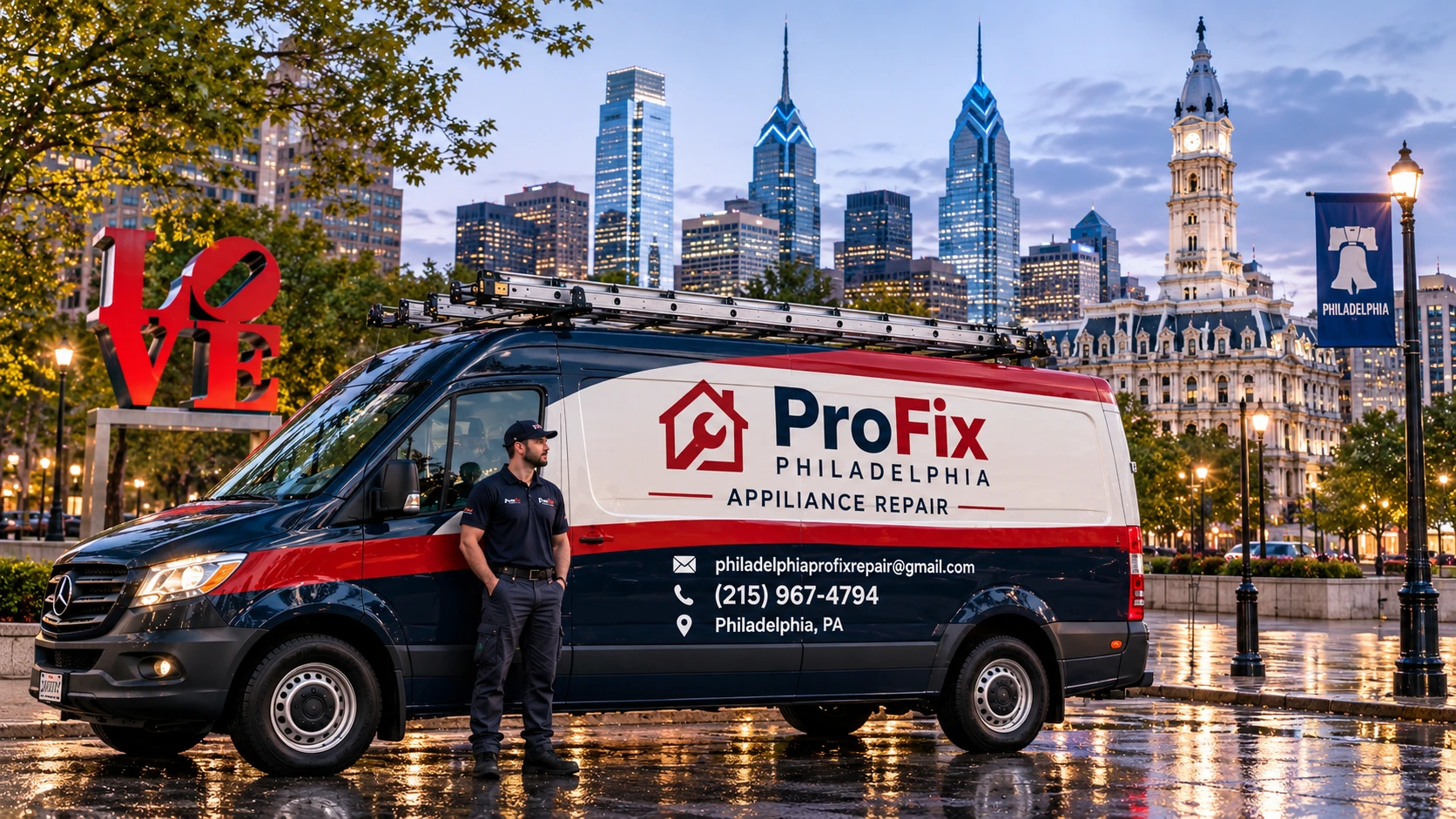
ZIP 19145 · South Philadelphia
Appliance Repair in 19145 · South Philadelphia
In-home repair for homes in the 19145 ZIP code, part of South Philadelphia.
Or book online and we'll get back to you to set a visit window.
Schedule Your Repair
Four quick steps. We'll confirm a visit window with you, and you'll get a written estimate before any work starts.
Service Type
What type of service do you need?
Or call us directly:
(215) 967-4794Girard Estate, Packer Park and South Philadelphia West of Broad
Appliances we repair in 19145
Each link opens the South Philadelphia page for that appliance.
Brands we service in South Philadelphia















































Repair Service Built for Philadelphia-Area Homes
The 19145 ZIP code covers South Philadelphia west of Broad Street, including Girard Estate with its twin homes, Packer Park's newer houses near the sports complex, and long blocks of brick rowhouses around Newbold and the neighborhoods beside them. In most of the older houses, the washer and dryer live in the basement, often next to a laundry tub and floor drain. That setup works well until the drain cannot keep up.
How It Works
Related Services
Philadelphia, PA & NJ
Ready to schedule your repair?
Philadelphia ProFix Repair: independent, in-home appliance repair with a written estimate before any work starts.
Basement Washer Drains and Backups
A modern washer pumps water out quickly, faster than an old washer did. In a basement where the machine empties into a laundry tub, a tub drain partly clogged with lint can fill and overflow during the spin cycle. Where the hose goes into a standpipe, a standpipe that is too short or too narrow, or a hose pushed in too deep, can cause overflow or siphoning, which shows up as a washer that keeps draining while it fills.
A lint trap or mesh sock on the end of the drain hose protects the tub drain, and clearing it every few loads helps a lot. If the washer itself is slow to drain, shows a drain error or leaves clothes soaking wet, the drain pump filter on a front loader or the pump on a top loader may be clogged with socks, coins or hair ties.
Water rising from the floor drain is a different problem. Much of older Philadelphia is on a combined sewer, and during heavy rain the sewer can back up into basement drains. If the water comes up from the floor drain rather than from the machine, that is a plumbing and sewer issue, not a washer fault, and the washer should be checked for water damage to its motor and controls afterward.
Before a Basement Visit in 19145
Light the basement stairs and the space around the machines, and clear a path down. Note whether the washer drains into a tub or a standpipe, and whether water has ever come up through the floor drain. If you can, leave the washer as it stopped so the technician can see the water level.
Still have questions?
Call or book online and ask us directly. We'll give you a straight answer.